
Structural Drying in Somerset, WI
Once the water is gone, the floors and walls around it are still wet. Structural drying pulls that moisture out of the building itself, before it turns into warping, swelling, or mold.
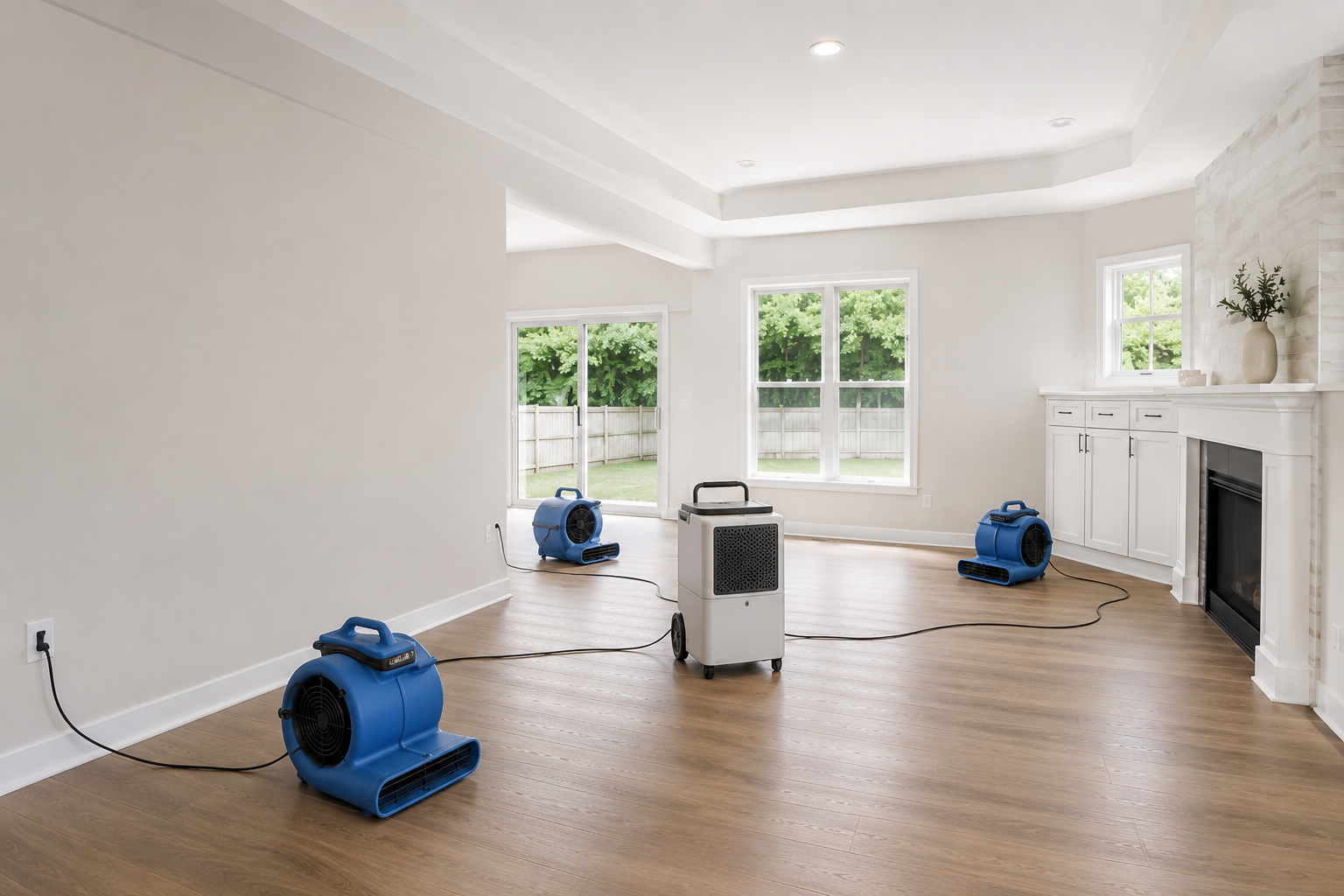
Wet materials will not dry fast enough on their own.
Air movers and dehumidifiers reach moisture a fan and an open window cannot. Call to get drying set up before the damage spreads.
Drying the parts of the house you cannot wring out
Pulling out standing water is only the first half. The materials that soaked it up hold water and have to be dried on purpose:
- Subfloor and the wood framing underneath it.
- Drywall and the insulation inside the wall cavity.
- Concrete slabs, which give up water slowly for days.
- Carpet pad, baseboards, and door trim near the floor.
- The damp air in the room, which slows everything else down.
Surface-dry is not dry
- A floor can feel dry on top while the layer under it stays soaked.
- Water wicks up walls and sideways along the subfloor.
- Trapped moisture is what leads to swelling, buckling, and mold.
- Drying is done when the readings say so, not when it feels dry.
Air movers, dehumidifiers, and a closed-off room
The equipment does three plain jobs at the same time. None of it needs to be a mystery:
- Move the air. Air movers push a steady stream across wet floors and walls so moisture lifts off instead of sitting there.
- Pull out the humidity. Dehumidifiers take that moisture out of the air so it does not just soak back into the room.
- Close off the space. Keeping the wet area shut in lets the equipment work on that room instead of the whole house.
The equipment is standard restoration gear, not anything exotic. It is placed where the readings show the most moisture and moved as the space dries.
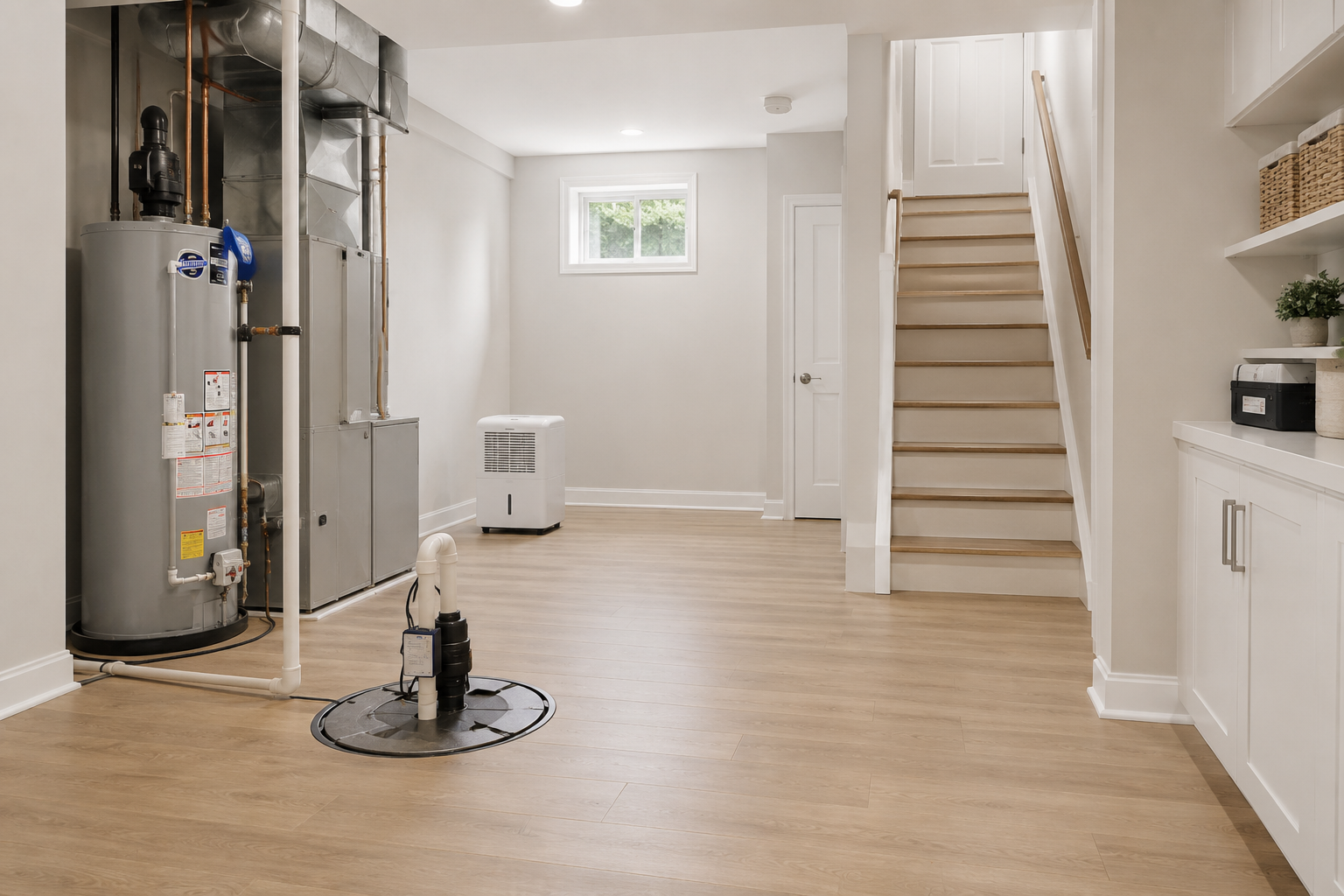
Drying runs on the materials, not the calendar
How long drying takes depends on what got wet and how far the water went. No honest answer comes as a fixed number of days up front, and no one can promise one:
What got wet
Concrete and hardwood hold water far longer than carpet or drywall. The slowest material sets the pace.
How deep it soaked
A quick spill dries sooner than water that sat overnight and wicked up into the walls.
The room conditions
Temperature, humidity, and airflow all change how fast moisture leaves the structure.
Drying equipment often runs for several days and gets checked along the way. The readings decide when it comes out, not a guessed date and not a promise made before anyone has seen the damage.
How we know it is actually drying
- Moisture meters read the walls, subfloor, and framing, not just the surface.
- The same spots get checked over time to watch the numbers fall.
- Equipment gets moved or added wherever readings stay high.
- Drying stops when the materials reach a normal, dry reading.
- You can be shown the readings, so it is not a guessing game.
The meter settles the question
- A dry-feeling floor can still read wet underneath.
- Numbers show whether drying is finished or only slowing down.
- Pulling equipment too early lets moisture creep back.
- A separate moisture inspection can confirm the space is fully dry.
Structural drying questions
Can I just run my own fans and open the windows?
Household fans move surface air but do little for water inside the subfloor or walls, and open windows can add humidity on a damp day. Drying equipment moves far more air and pulls the moisture out of the space. A short call to +1 715 286 9940 sorts out what the job actually needs.
The floor feels dry. Do I still need drying?
Maybe. Surfaces dry first while the subfloor, framing, and lower walls can stay wet for days. Moisture readings answer it without guessing, and skipping the check is what leads to warping and mold later.
How long will the equipment need to run?
It depends on what got wet and how deep the water went, so there is no fixed number of days that is honest to promise up front. Equipment often runs for several days and is checked along the way, and it comes out when the readings reach a normal dry level.
Dry it out before it warps or molds.
Call +1 715 286 9940 if a room still feels damp after water damage, or send a request and describe what got wet.
Request Help Online
Tell us what got wet and the best way to reach you. Prefer to talk now? Call +1 715 286 9940.
Prefer to call?
Damp materials keep breaking down while they sit. Call +1 715 286 9940 and talk through what got wet.